Need Help Now? Call (912) 297-1532
24 Hour Emergency Towing Service | Roadside Assistance
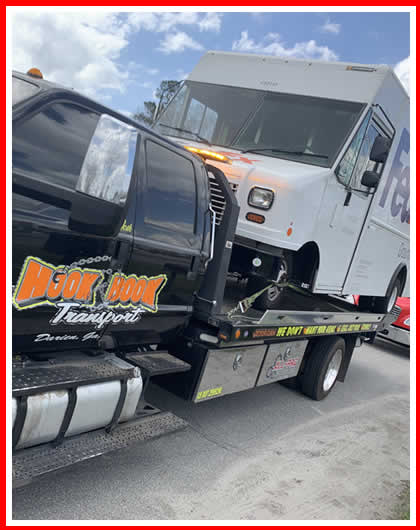
Medium duty towing typically applies to vehicles weighing between 10,000 and 26,000 pounds. These vehicles are larger than personal cars and pickups, yet smaller than full commercial tractor-trailers. They need stronger tow trucks, heavier wheel-lift systems, and more control during transport.
If your truck is larger than a normal pickup but not an 18-wheeler, it almost always fits in this category. Anything beyond this level may require Heavy Duty Towing.
Medium duty towing is heavily tied to work and transportation. These vehicles live hard lives on the road, and when something fails, it often fails in the middle of a job.
Mechanical Breakdowns
Transmissions overheat. Brakes wear down under load. Fuel systems clog. When these trucks stop running, they can’t simply be pushed to the shoulder like a car. Medium duty towing is the only safe way to move them.
Accidents & Worksite Collisions
Box trucks and utility vehicles are often involved in low-speed jobsite or traffic accidents. If axles, steering, or frames are damaged, the truck must be towed. More details are available on our Accident Recovery page.
Stuck Vehicles on Soft Shoulders or Sites
Construction zones, sandy shoulders, and muddy work areas trap medium-sized trucks fast. One wrong turn off pavement during rain can bury a drive axle to the frame. In these cases, Winching & Off-Road Recovery often becomes part of the job.
Medium towing fills an important gap in recovery work.
Using the wrong size truck for a tow can cause frame damage, brake failure, or unstable transport. That’s why matching the tow truck to the vehicle weight matters.
If your vehicle is smaller than this, view our Light Duty Towing page.
Medium duty vehicles are usually towed using upgraded wheel-lift systems or specialized flatbeds built for heavier loads.
Medium Duty Wheel-Lift Towing
This method lifts the drive axle of the truck off the ground and is commonly used for:
Medium Duty Flatbed Towing
Flatbeds are used when:
Each tow is assessed before hooking a vehicle so it moves safely and steadily.
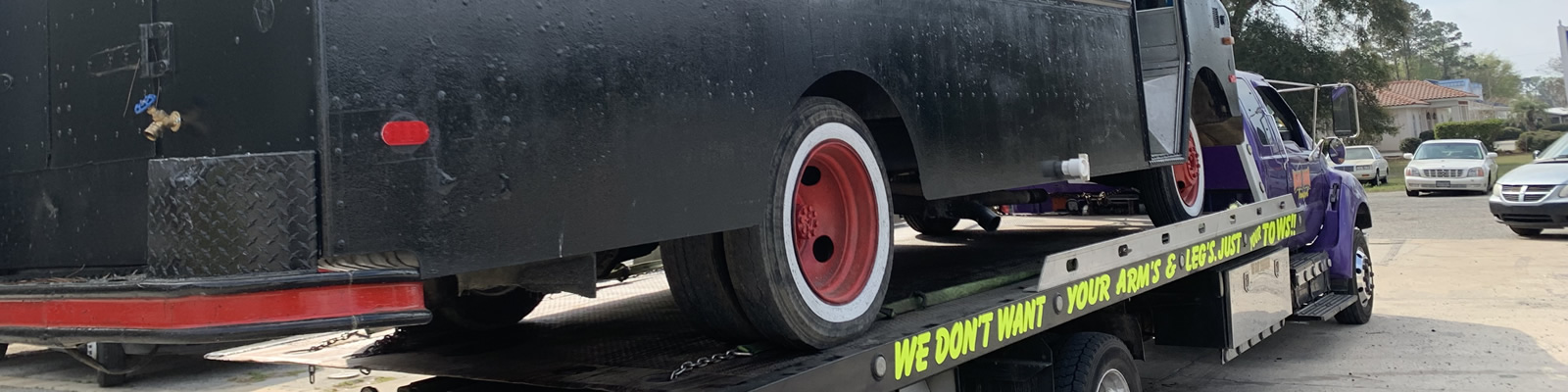
Medium duty towing supports the backbone of local business. Delivery trucks supply stores. Service trucks keep power, plumbing, and construction moving. Landscaping trucks carry heavy equipment. When one of these vehicles goes down, entire schedules fall apart.
We’ve towed medium duty trucks from:
From Darien to surrounding roads in both counties, medium duty towing keeps local work moving again.
One afternoon after a heavy storm, a loaded landscaping truck slipped off a soft driveway and buried its rear axle. The driver tried rocking it free, but every attempt dug it deeper. A careful winch pull followed by a medium duty tow got it back on the road without wrecking the yard.
Another call came from a delivery driver whose box truck lost transmission pressure during a run through Glynn County. The load was time-sensitive, and a transfer was arranged after towing it to a safe area. That one tow saved an entire route of deliveries.
Medium duty towing is often the difference between a hard delay and a total standstill.
Some medium duty calls start small and grow fast. A simple shoulder breakdown might turn into a ditch recovery. A minor collision could reveal frame damage. A loaded truck might shift cargo and require Load Swapping before transport. When that happens, the recovery plan adjusts to match the condition of the truck and load.
Medium duty trucks face different seasonal problems than passenger vehicles.
Summer Heat
Heavy loads combined with coastal heat lead to radiator failures, brake fade, and blown hoses.
Storm Season
Rain softens job sites and shoulders. Medium trucks slip fast when they leave pavement.
Winter Cold Snaps
Cold fuel systems and thick fluids impact diesel-powered work trucks more than gas vehicles.
Vehicles weighing between 10,000 and 26,000 pounds typically fall into medium duty towing.
Yes. Box trucks, service trucks, and utility vehicles are common medium duty tows.
Yes, depending on load weight and balance. In some cases, load swapping may be required.
Medium duty winching can often recover it. If it’s deeper than expected, we adjust the recovery plan.
Yes. Work trucks break down at all hours, not just during office time.
Hook & Book Transport and Towing works throughout all of McIntosh and Glynn Counties. Below are some areas we've towed in recently; however, not all areas are listed.
When a work truck breaks down, the jobsite waits, the deliveries stop, and the pressure stacks up quickly. Hook & Book Transport provides medium duty towing across Darien, McIntosh County, and Glynn County to get those trucks moving again.
Call (912) 297-1532 for medium duty towing from Hook & Book Transport.
Service Area Map
© Hook & Book Transport. All Rights Reserved. Web Design