Need Help Now? Call (912) 297-1532
24 Hour Emergency Towing Service | Roadside Assistance
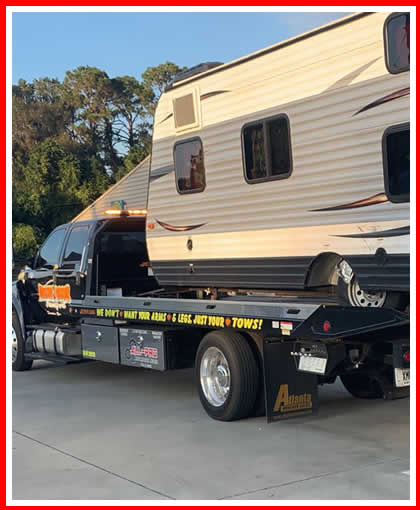
Heavy duty towing is what gets called in when the biggest vehicles on the road can’t move under their own power. These are the semis, dump trucks, buses, and large work vehicles that keep commerce rolling through coastal Georgia. When one of these giants breaks down or crashes, it doesn’t just slow traffic—it can shut a road down completely.
If a vehicle is too large for Medium Duty Towing, it almost always becomes a heavy duty tow.
Heavy vehicles run hard and carry heavy loads. When something goes wrong, it usually goes wrong in a big way.
Mechanical Failures
Blown engines, seized brakes, transmission loss, and driveline failures are all common causes of heavy duty tows. When these systems fail under load, the vehicle becomes unsafe to operate immediately.
Accidents & Highway Collisions
Wrecks involving semis and large trucks require careful recovery planning. Jackknifed trailers, overturned units, and damaged frames often mean lanes must be closed before recovery begins. Learn more on our Accident Recovery page.
Stuck or Off-Road Heavy Vehicles
Heavy vehicles sink fast when they leave solid pavement. Shoulders, medians, construction zones, and soft coastal ground quickly trap large trucks. These situations often require winching and staged recovery. See our Winching & Off-Road Recovery page for details.
The line between medium and heavy duty towing matters. Using equipment that’s too light for the job risks equipment failure, vehicle damage, and unsafe recovery.
Heavy duty rigs use reinforced frames, larger winches, stronger air brake systems, and extended reach to move massive loads safely. When the weight climbs, everything about the recovery changes.
If your vehicle is smaller than this, view our Medium Duty Towing page.
Freight moves constantly through this region. Trucks travel coastal highways, port routes, rural delivery roads, and industrial corridors day and night. When a heavy truck goes down, drivers, dispatchers, cargo schedules, and traffic flow are all affected at once.
We handle heavy duty towing from:
From Darien to surrounding routes across both counties, heavy duty towing clears blockages and keeps freight moving again.
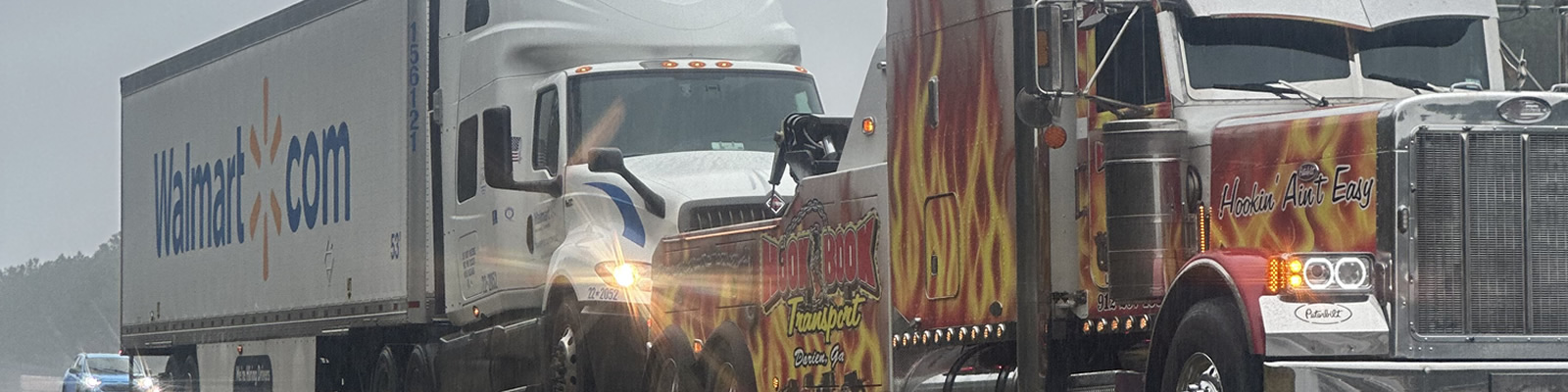
Heavy trucks often break down under load. When cargo shifts, a vehicle may become unsafe to tow without correcting the balance. In these cases, Load Swapping may be needed before towing can begin. Transferring the freight allows the disabled unit to be moved safely without risking rollovers or frame damage.
One nighttime call involved a loaded semi that lost braking power on a ramp and rolled to a stop blocking traffic. The trailer was fully loaded, and the unit couldn’t be safely moved without stabilizing the entire assembly. A staged heavy duty tow cleared the lane and prevented further damage.
Another recovery involved a dump truck that sank into a saturated construction site after a storm. The deeper it tried to drive, the deeper it buried itself. Controlled winching combined with heavy towing brought it back to solid ground without tipping.
Heavy duty recoveries rarely look simple—and they never move fast without planning.
Some heavy duty calls require more than a straight tow. Jackknifes, rollovers, severe off-road sinks, and load failures often require a full recovery plan with traffic control, winching, and load stabilization. When that happens, each step is handled in sequence to keep the roadway safe and the equipment secure.
Heavy vehicles face different weather risks than smaller vehicles.
Summer Heat
High temperatures strain cooling systems, especially under full loads. Brake systems also run hotter, increasing failure rates.
Storm Season
Rain weakens shoulders and construction zones. Heavy trucks slide off pavement more easily than drivers expect.
Winter Cold Snaps
Cold thickens diesel fuel and impacts air brake performance, leading to sudden shutdowns.
Semis, tractor-trailers, buses, cement trucks, large dump trucks, and any vehicle over 26,000 pounds.
Yes, depending on load balance, axle condition, and roadway space. In some cases, load swapping is required first.
Heavy winching and controlled recovery methods are used to return it to solid pavement.
Yes. Heavy duty accident recovery is part of what we do.
Yes. We tow to approved repair locations, yards, and terminals as directed.
Hook & Book Transport and Towing works throughout all of McIntosh and Glynn Counties. Below are some areas we've towed in recently; however, not all areas are listed.
When a semi, dump truck, or large commercial vehicle is stuck, every minute matters for traffic, freight, and safety. Hook & Book Transport provides heavy duty towing across Darien, McIntosh County, and Glynn County to clear the road and get equipment moved safely.
Call (912) 297-1532 for heavy duty towing from Hook & Book Transport.
Service Area Map
© Hook & Book Transport. All Rights Reserved. Web Design