Need Help Now? Call (912) 297-1532
24 Hour Emergency Towing Service | Roadside Assistance
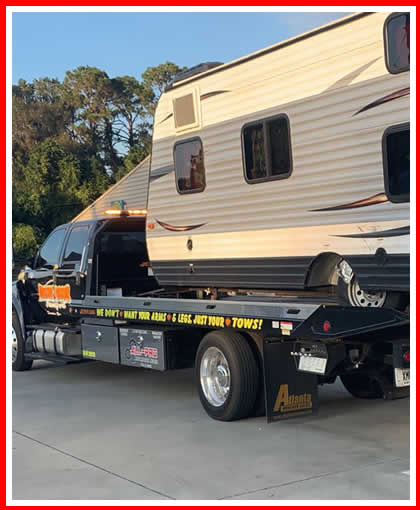
Heavy duty towing generally applies to vehicles that weigh more than 26,000 pounds. These vehicles are far beyond what light or medium tow trucks are built to handle.
If a vehicle is too large for Medium Duty Towing, it almost always becomes a heavy duty tow.
Heavy vehicles work under constant strain, and when something fails, it often fails without warning.
Mechanical Failures Under Load
Engine failures, brake lockups, transmission loss, and cooling system breakdowns are common reasons heavy trucks need towing.
Highway Accidents & Jackknifes
High-speed crashes involving large trucks can block lanes and require staged recovery before towing begins. These situations often involve Accident Recovery along with towing.
Off-Road & Shoulder Slide-Offs
Heavy trucks that leave pavement sink fast in soft ground. Once buried, they require controlled winching before towing. These situations often begin with Winching & Off-Road Recovery.
Knowing the difference between medium and heavy duty towing matters for safety.
Heavy duty tow trucks use larger booms, stronger winches, heavier frames, and air brake systems to control extreme weight during movement. Using lighter equipment on heavy loads risks equipment failure and unsafe conditions.
Freight moves constantly through this region. Trucks travel coastal highways, port routes, rural delivery roads, and industrial corridors day and night. When a heavy truck goes down, drivers, dispatchers, cargo schedules, and traffic flow are all affected at once.
We tow heavy vehicles from:
From busy freight routes to quiet stretches of highway in Sterling, heavy duty towing clears large vehicles when they can’t move under their own power.
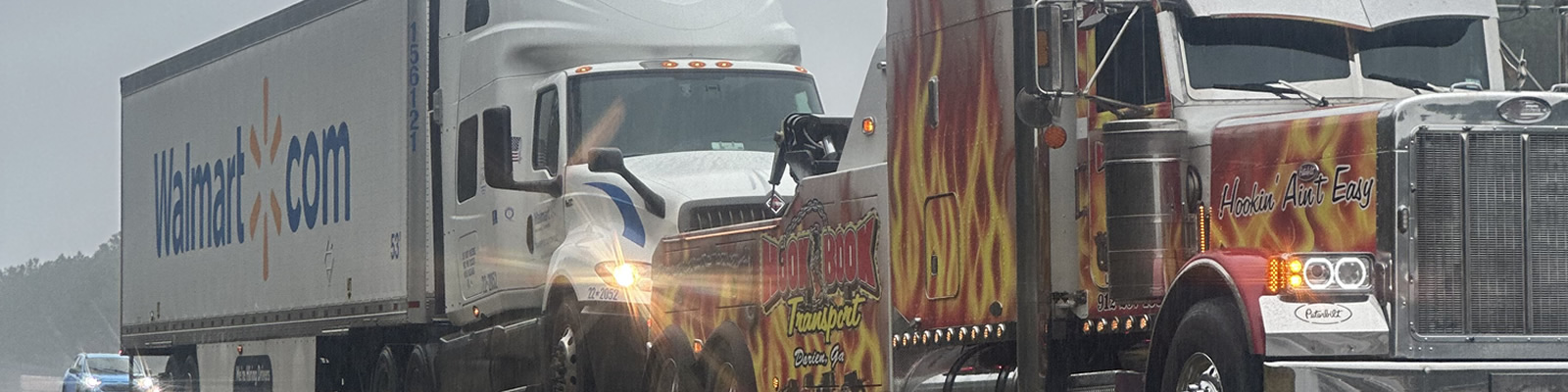
When a heavy truck is disabled while carrying cargo, the load often becomes part of the recovery plan. Shifted or unbalanced freight can make towing unsafe until it’s transferred.
In these situations, Load Swapping is used to move the cargo to another trailer or carrier so the disabled unit can then be towed safely.
ome heavy duty calls turn into full-scale recoveries. Jackknifed trailers, rolled units, and severe off-road incidents require staged winching, cargo control, and careful upright work before towing can even begin. These situations often involve both Winching & Off-Road Recovery and Accident Recovery together.
Seasonal changes play a big role in how and where heavy trucks break down.
Summer Heat
High temperatures strain cooling systems and braking components under full load.
Storm Season
Rain weakens shoulders and job sites, leading to slide-offs and sink-ins.
Winter Cold Snaps
Cold impacts diesel fuel flow and air brake systems, leading to shutdowns.
Semis, tractor-trailers, buses, cement trucks, large dump trucks, and any vehicle over 26,000 pounds.
Yes, depending on load balance, axle condition, and roadway space. In some cases, load swapping is required first.
Heavy winching and controlled recovery methods are used to return it to solid pavement.
Yes. Heavy duty accident recovery is part of what we do.
Yes. We tow to approved repair locations, yards, and terminals as directed.
We tow throughout McIntosh County and Glynn County and can move vehicles to nearby cities, homes, shops, and yards as needed.
When a semi, dump truck, or large commercial vehicle is sitting disabled in Sterling, everything around it slows down fast. Hook & Book Transport provides heavy duty towing across McIntosh and Glynn County to clear large vehicles safely and steadily.
Call (912) 297-1532 to reach Hook & Book Transport for heavy duty towing in Sterling.
Service Area Map
© Hook & Book Transport. All Rights Reserved. Web Design