Need Help Now? Call (912) 297-1532

24 Hour Emergency Towing Service | Roadside Assistance
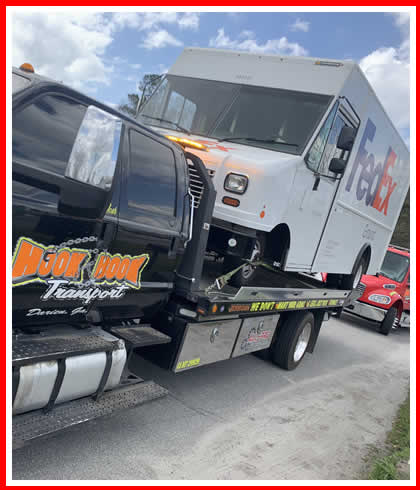
Load swapping is the process of moving freight from one truck to another when the original unit cannot be towed safely with its cargo still onboard. This may be due to mechanical failure, accident damage, or unbalanced weight that makes towing unsafe.
Instead of leaving freight stranded on a shoulder, in a yard, or at a wreck scene, load swapping allows:
It turns a full stop into a controlled adjustment.
Breakdowns on highways and busy roads require fast clearance. Load swapping often allows the disabled truck to be removed much faster.
Mechanical Breakdowns Under Load
Transmission loss, brake failure, cooling issues, and driveline problems often happen while a truck is fully loaded. Towing the unit under full weight is not always safe.
Accident-Related Cargo Transfers
After crashes, cargo often shifts or the trailer becomes unstable. In these cases, load swapping must happen before Accident Recovery and towing can be completed safely.
Shifted or Unbalanced Loads
Sudden braking, sharp turns, or uneven ground can cause freight to shift inside the trailer. When that happens, the weight must be redistributed or transferred before towing.
Roadside Breakdowns in Traffic Areas
Breakdowns on highways and busy roads require fast clearance. Load swapping often allows the disabled truck to be removed much faster.
Load swapping is used across many industries and cargo types, including:
Each load is handled based on how it is packaged, balanced, and secured.
Each load swap follows a careful process. First, the disabled truck and its cargo are inspected for safety. Then a receiving trailer or carrier is positioned. The cargo is transferred in a controlled way to avoid further shifting or damage. Once the disabled unit is empty or properly balanced, it can be moved safely.
After the transfer, towing is handled using:
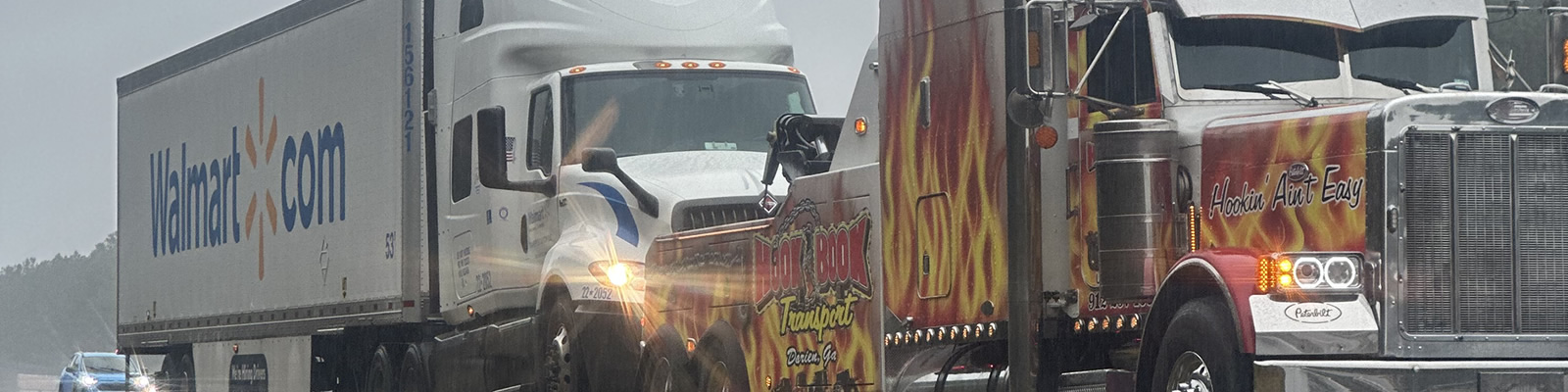
Load swapping often works directly with towing services. Medium duty trucks loaded with tools, supplies, or equipment may require load transfer before towing. Tractor-trailers nearly always require load swapping when cargo affects balance or axle weight.
Once the load is transferred:
From busy freight lanes to quiet job sites in Townsend, load swapping keeps stalled cargo from becoming a major delay.
Weather and seasonal traffic both shape accident recovery here.
Summer Heat
Heat increases breakdowns in loaded trucks, especially with cooling and braking systems.
Storm Season
Rain and wind lead to slide-offs, jackknifes, and cargo shifts that require load transfer before recovery.
Winter Cold Snaps
Cold affects diesel systems and air brakes, leading to roadside breakdowns under load.
Yes. Load swapping is commonly used for tractor-trailers and large freight trucks.
Yes, when traffic control and ground conditions allow for safe transfer.
Once empty or balanced, the truck is towed to a repair yard or terminal.
Yes. Cargo involved in crashes is often transferred as part of recovery.
Most load swapping involves medium and heavy trucks, but some smaller work vehicles also require it.
We tow throughout McIntosh County and Glynn County and can move vehicles to nearby cities, homes, shops, and yards as needed.
When a truck breaks down under load in Townsend, leaving freight sitting still isn’t an option. Hook & Book Transport provides load swapping across McIntosh and Glynn County so cargo can continue moving and disabled trucks can be towed safely.
Call (912) 297-1532 to reach Hook & Book Transport for load swapping in Townsend.
Service Area Map
© Hook & Book Transport. All Rights Reserved. Web Design